
Why Software Bundling Saves Plumbing Teams Time and Money
Discover why software bundling saves plumbing teams time and money. Streamline operations and boost efficiency with integrated solutions today!
June 1, 2026
Article
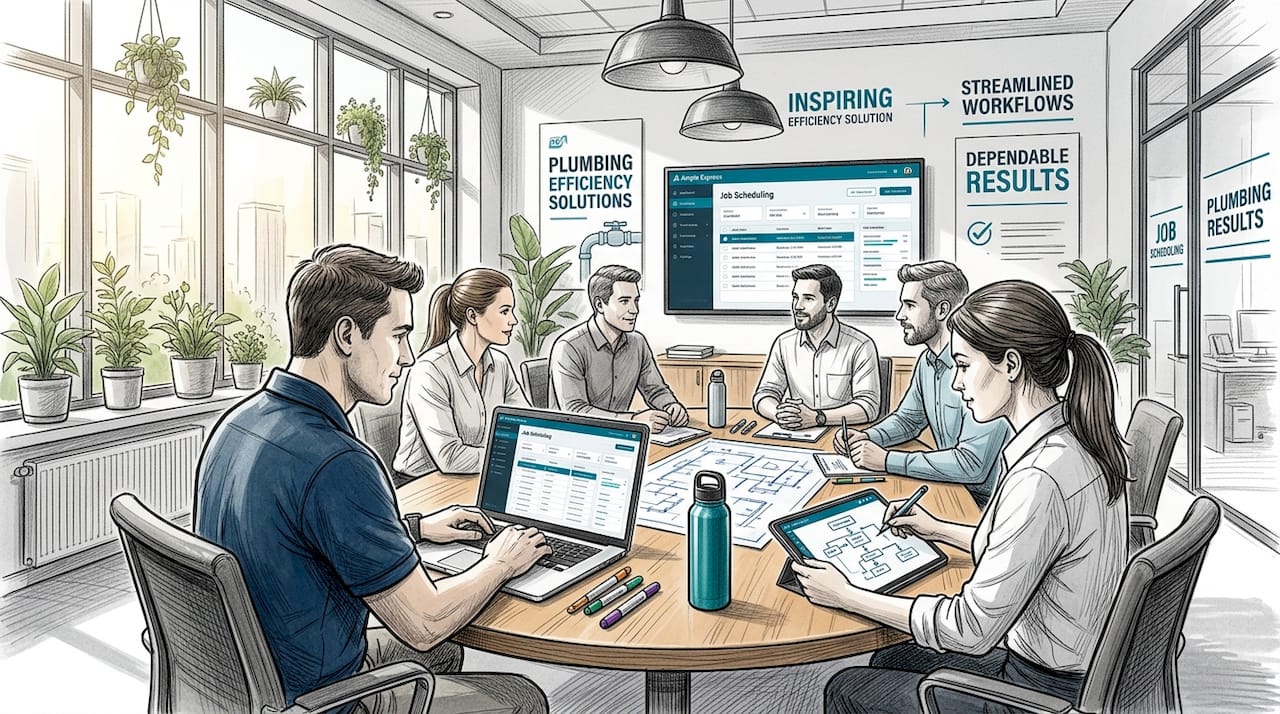
Software bundling is the integration of scheduling, dispatch, billing, job costing, and field communication into a single connected platform that eliminates manual data reconciliation for plumbing teams. This approach, also called unified field service management, is why software bundling saves plumbing teams significant labor hours and cash flow delays. Platforms like Simpro, FieldPulse, and CrewOS demonstrate how connecting back-office and field operations into one system reduces paperwork, cuts billing disputes, and recovers billable time that fragmented apps routinely waste. The data is clear: plumbing contractors who consolidate their tools outperform those running disconnected software stacks.
Why software bundling saves plumbing teams from admin overload
Disconnected tools create a hidden tax on your operation. Every time a technician logs a job in one app and a dispatcher re-enters that data into a separate billing system, you pay for that duplication in labor hours and errors. Single source of truth workflows eliminate this by letting data flow automatically from field entry to scheduling, invoicing, and reporting without anyone touching it twice.
The operational cost of this redundancy is larger than most contractors realize. Back-office managers who manually reconcile time logs, dispatchers who field constant status calls, and technicians who fill out paper forms at the end of a shift are all symptoms of the same problem: software that does not talk to itself. Platforms like Simpro Lightning have cut daily paperwork by 30 to 60 minutes per technician, which translates directly into recovered labor capacity.
Here is where the benefits of software bundling become concrete for plumbing teams:
- Eliminated double entry: Job details captured in the field populate dispatch, billing, and job history automatically.
- Fewer dispatch calls: Dispatchers access real-time job status without calling technicians mid-job.
- Reduced billing errors: Automated documentation removes the manual step where mistakes enter the invoice.
- Faster back-office processing: Managers close jobs and generate invoices the same day instead of the next morning.
- Lower training overhead: One platform means one login, one workflow, and one training process for new hires.
Pro Tip: Before selecting a software bundle, map your current workflow from first customer call to final invoice. Identify every point where data is re-entered manually. That list is your ROI calculation.
How does centralized scheduling improve plumbing team efficiency?
Scheduling is where plumbing team efficiency is won or lost each day. Centralized scheduling software can recover 45 to 90 minutes of billable time per crew per day by optimizing routes and reducing non-productive drive time. For a four-technician crew, that is up to six hours of recovered capacity daily without adding a single person to payroll.

Integrated dispatch goes beyond route planning. When GPS data, technician skill sets, and job location are all visible in one interface, dispatchers make better real-time decisions. A job that opens up in the northwest part of the city gets assigned to the technician already working nearby, not the one across town. This kind of automatic job matching by geography and skill is only possible when scheduling and field data share the same platform.
The steps below show how a connected scheduling system compounds its value throughout the day:
- Morning optimization: The system sequences jobs by travel time and technician location before the first truck rolls.
- Real-time re-routing: When a job runs long or a new emergency call comes in, the dispatcher adjusts the schedule and all affected technicians receive updated routes instantly.
- Workload balancing: The platform flags when one technician is overloaded and another has capacity, preventing burnout and maximizing utilization.
- End-of-day reporting: Completed jobs, drive time, and billable hours are captured automatically, giving managers accurate utilization data without manual timesheets.
Pro Tip: Use your scheduling platform's daily re-sequencing feature every morning, not just when problems arise. Without daily discipline, dispatch optimization software delivers a fraction of its potential ROI.
Standalone tools vs. integrated software bundles: what's the real difference?
The honest comparison between standalone tools and integrated software bundles comes down to one question: how many times does the same piece of data get touched before a job is closed? With standalone tools, the answer is usually three to five times. With a connected bundle, it is once.
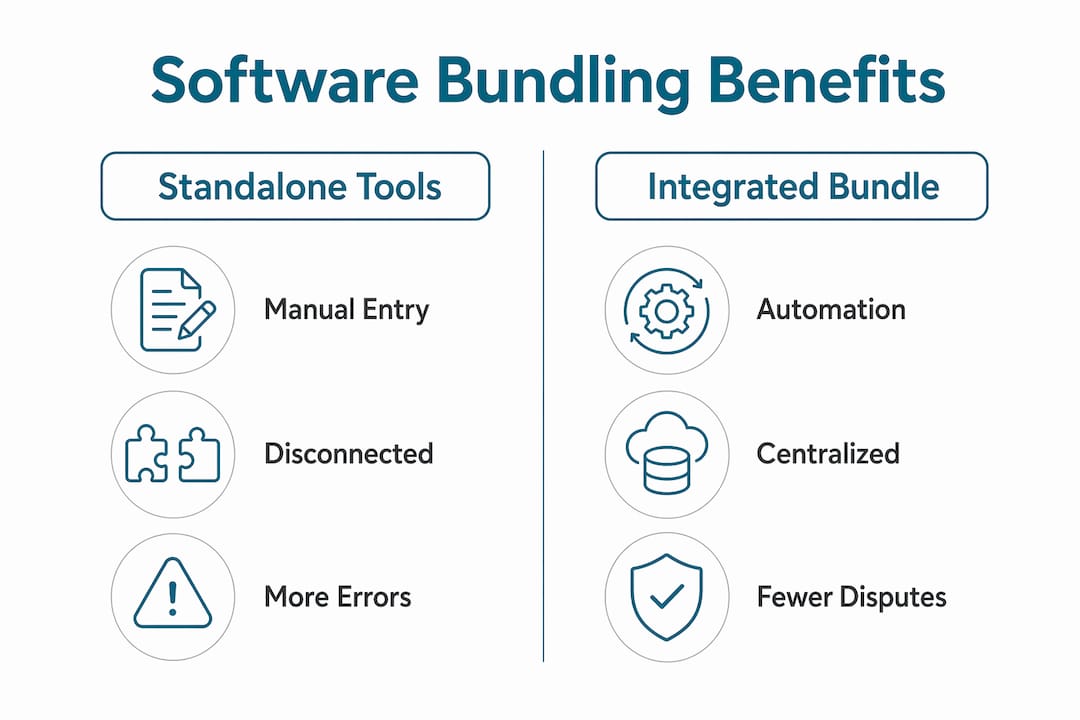
Contractors consolidating workflows into connected platforms reduce workflow gaps, improve field-to-office communication, and automate manual steps that previously required human intervention. The table below shows where the operational and financial differences appear most clearly.
| Category | Standalone tools | Integrated software bundle |
|---|---|---|
| Data entry | Manual re-entry across 3-5 apps | Single entry, auto-populated across modules |
| Billing accuracy | Higher error rate from manual transfer | Automated documentation reduces invoice errors |
| First-time fix rate | Industry average ~75% | Above 90% with AI-powered job briefing |
| Time to payment | 3-5 weeks typical cycle | Accelerated by 15-20 days |
| Labor cost equivalent | Higher overhead per job | Equivalent to 1-2 additional FTE in efficiency |
| Dispatch calls | Frequent status check-ins | Real-time visibility eliminates most calls |
The first-time fix rate difference is worth examining closely. AI-powered job briefing tools in integrated platforms push the right parts list, job history, and customer notes to the technician before they arrive on site. That preparation lifts fix rates from the 75% industry average to above 90%, which means fewer callbacks, lower fuel costs, and higher customer satisfaction scores.
The key nuance here is that bundling must eliminate reconciliation points, not just reduce the number of subscriptions you pay for. A contractor who buys a suite of tools from one vendor but never connects the modules has not bundled anything. The value is in the data flow, not the invoice consolidation.
How does software bundling reduce billing disputes and speed up payments?
Billing disputes in plumbing are almost always a documentation problem. When change orders are verbal, signatures are missing, and job notes live in a technician's memory, disputes are inevitable. Integrated software packages for plumbing solve this by capturing every change order digitally with an instant signature at the point of work.
ProcessBarron is the most cited example of what this looks like at scale. After adopting a unified platform, they cut manual labor costs by 75% and reduced their billing cycle from five weeks to 48 hours. They recovered over $1.6 million in one year through digital change order capture alone. That figure represents revenue that existed in their operation but was previously lost to undocumented work.
"The real value in bundling is ensuring all modules share one source of truth and workflows are architected end-to-end, preventing any manual data reconciliation." — CrewOS
The financial impact extends beyond dispute reduction. Platforms like Simpro Lightning accelerate payment cycles by 15 to 20 days and cut billing disputes by up to 40%. For a plumbing company running $2 million in annual revenue, a 20-day improvement in payment timing meaningfully changes working capital availability. Before you commit to a bundle, calculate your current average days-to-payment and your dispute rate. Those two numbers define your financial baseline and your ROI target.
Best practices for getting full value from a software bundle
Buying a software bundle is the first step. Getting full value from it requires deliberate adoption across your entire operation. Automation through intake, scheduling, job costing, and customer follow-ups collectively saves hours per person per day, but only when every module is actively used.
The most common failure mode is partial adoption. A team that uses the scheduling module but ignores the job costing and billing features has not eliminated reconciliation. They have just moved it. The back office still manually pulls data from the scheduling system to create invoices, and the efficiency gains disappear.
To maximize ROI from your software bundle, prioritize these practices:
- Connect all modules from day one. Scheduling, dispatch, job costing, billing, and mobile field tools must share data from the start. Phased rollouts that leave modules disconnected recreate the problem you are trying to solve.
- Train technicians on mobile tools before launch. Field adoption drives everything downstream. If technicians do not capture job notes, photos, and signatures in the app, the back office reverts to manual processes.
- Review utilization metrics weekly. Track technician utilization rates, callback rates, and average time to invoice. These three numbers tell you whether the bundle is working.
- Use built-in onboarding resources. Platforms like FieldPulse and Simpro include guided onboarding and training libraries. Use them instead of relying on informal peer training.
- Conduct daily schedule reviews. Re-sequence jobs each morning based on current travel time and technician location. This single habit compounds dispatch savings over time.
Pro Tip: Assign one person in your back office as the platform owner for the first 90 days. Their job is to identify any workflow that still involves manual data handling and close that gap inside the software.
Key takeaways
Software bundling saves plumbing teams by replacing manual data reconciliation with automated, end-to-end workflows that cut labor costs, reduce billing disputes, and recover billable field time.
| Point | Details |
|---|---|
| Admin overhead reduction | Bundled platforms cut 30-60 minutes of daily paperwork per technician by eliminating manual data re-entry. |
| Billable time recovery | Centralized scheduling recovers 45-90 minutes of billable crew time per day through route optimization. |
| Faster payment cycles | Integrated documentation accelerates payment by 15-20 days and reduces billing disputes by up to 40%. |
| First-time fix improvement | AI-powered job briefing in connected platforms lifts fix rates from 75% to above 90%. |
| Full adoption is required | Partial module use recreates manual reconciliation. All field and back-office functions must connect from day one. |
What I've learned watching plumbing teams adopt software bundles
Most plumbing contractors I work with arrive at the software conversation after adding one app at a time over several years. They have a scheduling tool, a separate invoicing platform, a GPS tracker, and maybe a customer communication app. Each one solved a specific pain point when they bought it. Together, they created a new problem: a fragmented operation where data lives in four places and someone in the back office spends their day copying and pasting.
The mistake is treating software as a collection of point solutions rather than as workflow architecture. When you add a new app to fix a specific problem, you are almost always adding a new reconciliation point at the same time. The efficiency you gain in one area gets consumed by the new manual step you created at the handoff between systems.
What I find consistently true is that the contractors who get the most from bundled software are the ones who map their workflow before they buy anything. They know exactly where data enters their operation, where it gets touched again, and where it falls through the cracks. That map tells them what a bundle needs to connect, and it gives them a clear way to measure whether the investment is working.
The next phase of this is already visible in platforms like Simpro Lightning. AI embedded directly into field service workflows will handle job briefing, parts ordering, and customer follow-up automatically. Plumbing teams that have already consolidated onto a single platform will absorb those capabilities with minimal disruption. Teams still running disconnected tools will face a much steeper adoption curve. The time to consolidate is now, not after the next platform generation arrives.
— Blake
Find the right software bundle for your plumbing operation
Choosing the wrong platform costs more than the subscription fee. It costs adoption time, retraining, and the opportunity cost of another year running inefficient workflows.
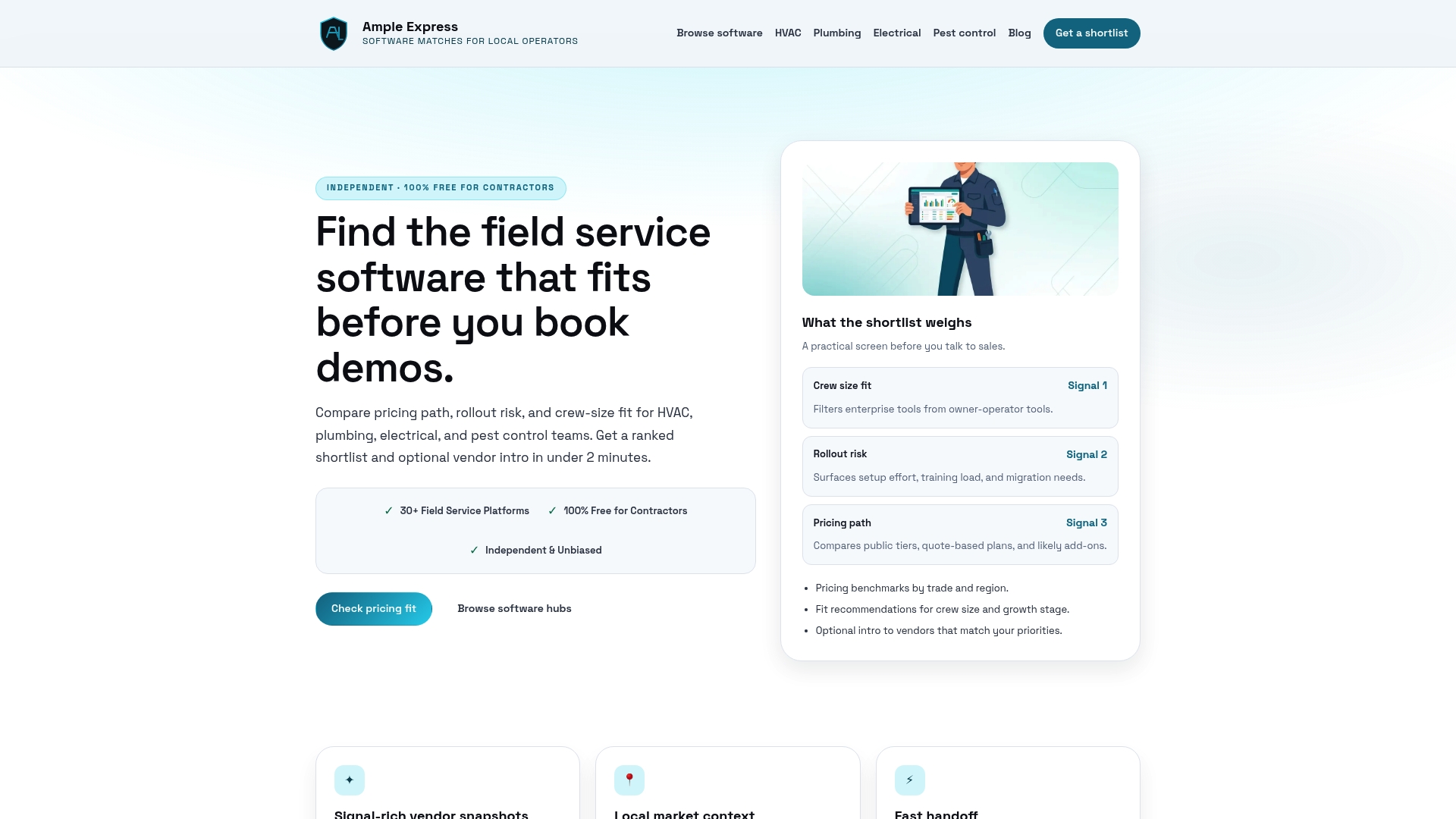
Ample Express evaluates over 30 field service software options and ranks them by crew size, operational fit, rollout risk, and regional pricing benchmarks. For plumbing contractors specifically, the platform identifies which bundles integrate scheduling, dispatch, billing, and mobile field tools into a genuinely connected system rather than a loosely packaged suite. You can also review top plumbing software tools side by side with pricing paths and fit recommendations built for your crew size. Share your team size and priorities with Ample Express to receive a shortlist tailored to your operation.
FAQ
What is software bundling for plumbing teams?
Software bundling is the practice of integrating scheduling, dispatch, billing, job costing, and field communication into a single connected platform. The goal is to eliminate manual data reconciliation between separate apps and create one source of truth for all job and financial data.
How much time can a plumbing team save with bundled software?
Centralized scheduling alone can recover 45 to 90 minutes of billable time per crew per day through route optimization. Integrated platforms also reduce daily technician paperwork by 30 to 60 minutes, according to data from Simpro Lightning.
Does software bundling actually reduce billing disputes?
Yes. AI-native platforms with digital change order capture and instant signatures reduce billing disputes by up to 40% and accelerate payment cycles by 15 to 20 days. ProcessBarron recovered over $1.6 million in one year after switching to a unified platform.
What is the biggest mistake plumbing teams make when adopting a software bundle?
Partial adoption is the most common failure. Teams that use only the scheduling module while continuing to manage billing manually recreate the same reconciliation problem the bundle was meant to solve. All modules must connect from day one to realize the full efficiency gains.
How do I know which software bundle fits my plumbing crew?
Crew size, regional pricing, and the specific workflows you need to connect all affect which platform fits best. Ample Express provides a ranked shortlist of over 30 field service platforms with fit recommendations based on your crew size and operational priorities.
Recommended
- austin Plumbing software guide | Ample Express
- chicago Plumbing software guide | Ample Express
- Servicetitan pricing guide for plumbing companies | Ample Express
- Service Fusion pricing guide for plumbing companies | Ample Express