
Multi-Vendor Software Comparison: A 2026 Guide for Managers
Learn what is multi-vendor software comparison and how it empowers managers to identify the best solutions, boosting operational efficiency.
July 2, 2026
Article

Multi-vendor software comparison is the systematic evaluation of multiple competing software solutions against standardized business criteria to identify the best operational fit. The industry term for this process is vendor evaluation, and it typically uses weighted scorecards or comparison matrices to produce repeatable, defensible decisions. 83% of organizations expect to manage 3+ vendors for core IT functions by 2026. That figure means most business owners are already operating in a multi-vendor environment, whether they planned for it or not. Understanding what is multi-vendor software comparison, and how to do it well, directly determines whether your software stack helps or hinders your operations.
What is multi-vendor software comparison and why does it matter?
Multi-vendor software comparison is a structured decision-making process. You evaluate several vendors against the same criteria at the same time, using a scoring system that reflects your business priorities. Without this structure, decisions default to whoever gave the best demo or quoted the lowest price.
The process matters because software choices carry long-term consequences. A field service business that picks the wrong dispatch platform faces months of retraining, data migration costs, and lost productivity. A structured comparison framework prevents that outcome by forcing you to evaluate cost, integration, scalability, and vendor stability before you sign anything.

Single-vendor setups serve small greenfield operations well, while larger businesses with complex workflows benefit from multi-vendor approaches. The trade-off is real: single-vendor means speed and simplicity; multi-vendor means flexibility and coordination overhead. Knowing which trade-off fits your crew size is the first decision you make.
Core frameworks for comparing vendor software platforms
The most widely used tool in multi-vendor software analysis is the weighted comparison matrix. You list your vendors in columns and your evaluation criteria in rows. Each criterion gets a weight (typically 1–5 or 1–10) based on how much it matters to your business. Each vendor gets a score for each criterion. Multiply score by weight, sum the column, and you have a ranked shortlist.
The four standard criterion categories are:
- Business fit: Does the software handle your core workflows, such as dispatch, job history, and invoicing?
- Commercial fit: Does the pricing model match your budget and crew size, including per-user fees and contract terms?
- Vendor fit: Is the vendor financially stable, well-supported, and responsive to field service businesses like yours?
- Adoption fit: How fast can your team learn and use the platform without disrupting active jobs?
Weighting matters more than scoring. A small HVAC contractor with five technicians should weight adoption fit heavily. A 50-person electrical firm should weight integration and commercial fit at the top. The matrix forces you to make those priorities explicit before you start talking to vendors.
Pro Tip: Build your matrix before you request demos. Vendors will emphasize their strengths during a demo. Your scorecard keeps the evaluation objective regardless of how polished the presentation is.
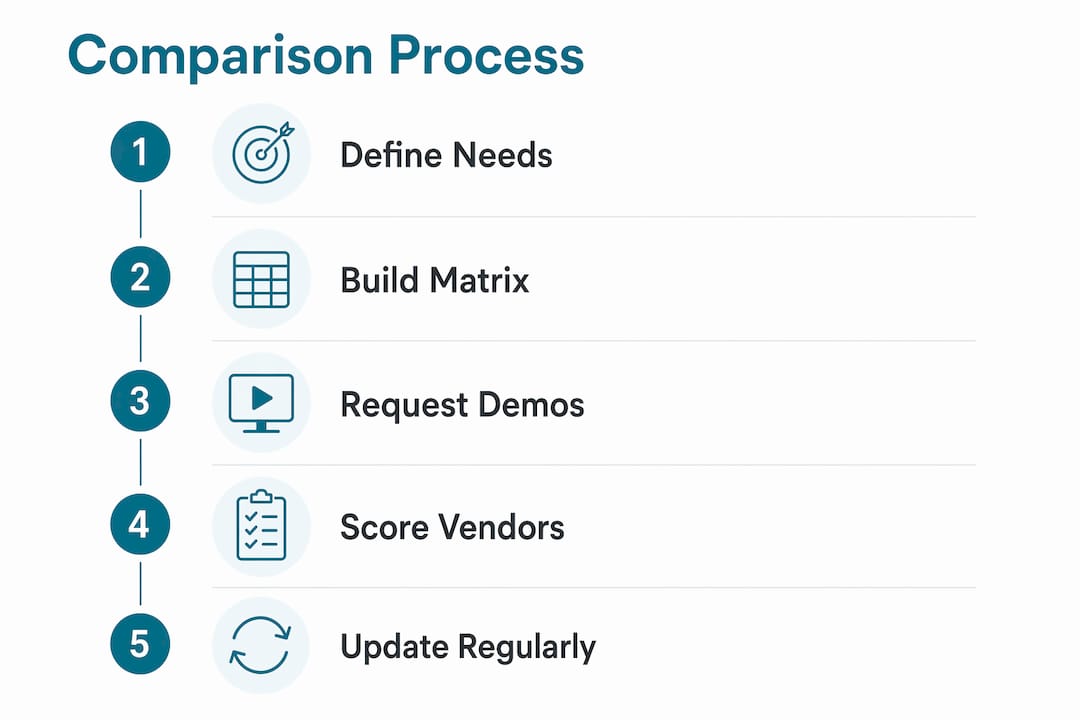
Comparison matrices work best as living documents updated as your requirements change. You do not restart from scratch every time a new vendor enters the market. You rescore against the same criteria and update your shortlist. That approach saves weeks of work during future procurement cycles.
Why software architecture matters more than features
Most managers compare features. The better question is: what architecture does this software run on? Software architectural models have more long-term cost and flexibility impact than vendor-specific features. Choosing the wrong model is expensive to reverse.
The three common models you will encounter in multi-vendor marketplace evaluation are:
SaaS overlay platforms sit on top of an existing ecommerce or operations engine. They add marketplace functionality without replacing your core system. SaaS marketplace overlays often start at $90,000/year plus transaction fees. That cost doubles your operational expenses if you are already paying for the underlying platform.
Open-core platforms provide a base system with a free or low-cost license. You pay for premium modules, support, and customization. Entry costs are low, but scaling requires developer resources and ongoing maintenance.
Plugin-based platforms bolt onto existing systems through integrations. Entry cost is minimal, but they hit scale limits quickly. A plumbing company with 10 trucks may outgrow a plugin-based solution within two years.
Aligning architecture to your business size is not optional. A five-person pest control team does not need a SaaS overlay at enterprise pricing. A 40-person HVAC operation cannot afford the scale ceiling of a plugin-based tool. Your software vendor selection process should filter by architecture before it filters by features.
Pro Tip: Ask every vendor: "What does migration out of your platform look like?" If they cannot answer clearly, that is a red flag. Exit difficulty is a cost you pay later, not upfront.
How to manage integration and vendor dependencies
Running multiple software vendors creates coordination overhead that most managers underestimate. Each vendor manages its own console, update schedule, and support queue. When something breaks at the intersection of two systems, both vendors point at each other.
Effective multi-vendor integration demands explicit mapping of dependencies, interfaces, and data ownership. You need a master integration plan that answers three questions for every connection between systems:
- Who owns the data at each stage of the flow?
- Who is responsible for testing that connection before go-live?
- Who fixes errors when the integration fails in production?
A prime contractor's warranty often does not extend to sub-vendors. That means your scheduling software vendor is not liable when your payment processor drops a transaction. You carry that risk unless your contracts say otherwise. Assign error-correction responsibilities in writing before deployment.
Stack diligence requires proactive management. Do not assume your primary vendor monitors the health of every connected tool. Assign someone on your team to verify integrations monthly, especially after any vendor pushes a software update. This practice catches problems before they affect your technicians in the field.
How to use review platforms without getting misled
Third-party review platforms like G2, Capterra, and TrustRadius give you peer feedback at scale. That feedback is useful, but it comes with a structural bias you need to understand. Paid vendor subscriptions on review platforms can cost $3,000–$87,000/year. Vendors who pay more get more prominent placement and review solicitation support.
That does not make the reviews fake. It does mean the ranking order reflects marketing spend as much as product quality. Cross-verify what you read on review platforms against your internal scorecard.
A practical approach to balanced multi-vendor software analysis:
- Pull the top 10 reviews for each vendor on at least two platforms.
- Filter for reviewers whose company size and industry match yours.
- Note recurring complaints, not just star ratings. Patterns in negative reviews reveal real operational friction.
- Score each vendor on your internal matrix after reading reviews, not before. Let the reviews inform your scoring, not replace it.
Combining peer feedback with internal objective scorecards produces the most balanced vendor evaluation. Neither source alone is sufficient. Review platforms show you what real users experience. Your scorecard shows you whether those experiences align with your specific priorities.
Pro Tip: Search for reviews from contractors in your trade and your crew size range. A 200-person enterprise's experience with a platform tells you almost nothing about how it will perform for a 12-person crew.
Key takeaways
Multi-vendor software comparison works best when you combine a weighted scorecard, architecture-first thinking, and cross-verified peer reviews into one repeatable process.
| Point | Details |
|---|---|
| Use a weighted matrix | Score vendors against business fit, commercial fit, vendor fit, and adoption fit before demos. |
| Prioritize architecture over features | SaaS overlay, open-core, and plugin-based models carry different long-term costs and scale limits. |
| Map integration responsibilities | Assign data ownership and error-correction duties in writing before any system goes live. |
| Cross-verify review platforms | Paid placements on G2 and Capterra reflect marketing spend; filter reviews by your trade and crew size. |
| Treat your scorecard as a living document | Update criteria and scores as your business grows rather than restarting each procurement cycle. |
The mistake I see managers make most often
Most managers I work with spend 80% of their evaluation time on features and 20% on everything else. That ratio is backwards. Features change with every software update. Architecture, exit costs, and integration responsibilities do not.
Decision-makers overfocus on features and underweight vendor lock-in and migration risks. I have seen field service businesses locked into platforms they outgrew because nobody asked about data export during the sales process. The migration cost exceeded two years of licensing fees.
Exit strategies and failover testing deserve annual review, not a one-time checkbox. Markets change. Vendors get acquired. A platform that was the right fit at 10 technicians may be the wrong fit at 30. Your comparison framework should include a scheduled annual rescore, not just a procurement-time evaluation.
The other mistake is treating the prime contractor as a single point of accountability. If your field service management platform connects to a separate payment processor and a separate parts ordering system, you have three vendors. Each one has its own compliance standards and support terms. Assuming the primary vendor covers the others is how you end up with unresolved billing errors and no clear path to a fix.
My advice: build your matrix, weight it honestly, and then spend equal time on the contract terms as you do on the demo. The demo shows you what the software can do. The contract determines what happens when it does not.
— Blake
How Ampleexpress supports your vendor comparison process
Ampleexpress builds independent, ranked shortlists of over 30 field service software options matched to your trade and crew size. The platform highlights pricing paths, rollout risk, and fit recommendations so you can evaluate vendors without starting from a blank scorecard.
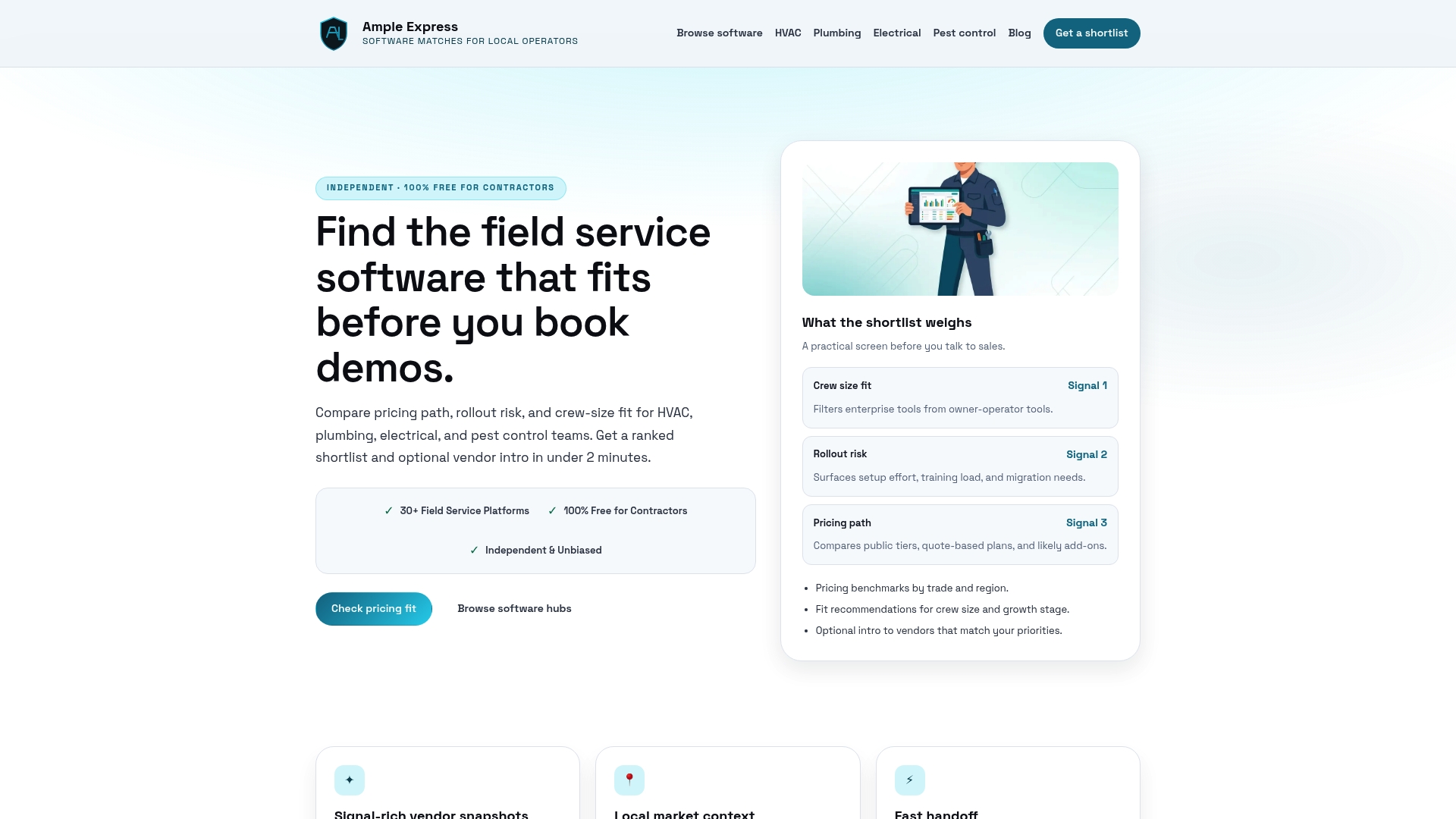
For HVAC, plumbing, electrical, and pest control contractors, Ampleexpress provides regional pricing benchmarks and crew size trends that generic review platforms do not carry. You can compare field service software side by side using criteria built for field operations, not enterprise IT departments. The field service software by trade page gives you a filtered starting point based on your specific work type, so you spend less time sorting and more time deciding.
FAQ
What is multi-vendor software comparison?
Multi-vendor software comparison is a structured evaluation process that scores multiple software vendors against consistent criteria like cost, integration, and scalability. It uses weighted matrices or scorecards to produce repeatable, defensible decisions.
How do I choose multi-vendor software for a field service business?
Start with a weighted scorecard that prioritizes adoption fit and commercial fit for your crew size. Filter by software architecture before evaluating features, and verify peer reviews against your internal criteria.
What are the benefits of multi-vendor software for contractors?
Multi-vendor approaches give contractors flexibility to pick best-fit tools for each function, such as dispatch, invoicing, and scheduling, rather than accepting one platform's compromises across all workflows.
How often should I update my vendor comparison matrix?
Update your scorecard at least once a year or whenever your crew size, trade mix, or operational requirements change significantly. Living comparison documents prevent costly one-off procurement decisions.
What is the biggest risk in multi-vendor software selection?
Vendor lock-in is the primary risk. Migration costs typically exceed licensing costs, so evaluating exit paths and data portability before signing is as important as evaluating features.