
Why Free Software Is Risky for Plumbing Businesses
Discover why free software is risky for plumbing businesses. Uncover hidden costs and cybersecurity threats that could jeopardize your operations.
June 1, 2026
Article
Free software for plumbing businesses is a liability disguised as a budget decision. The risks of free plumbing software span cybersecurity exposure, operational breakdowns, and hidden costs that consistently outpace any upfront savings. Plumbing firms rely on dispatch, scheduling, invoicing, and payment workflows that make them high-value targets for cyberattacks, including ransomware and business email compromise (BEC). Tools sourced from unofficial channels or locked behind feature caps create vulnerabilities that paid, vendor-supported platforms are specifically built to prevent. Understanding why free software is risky for plumbing businesses starts with knowing what you are actually giving up.
Why free software risky plumbing businesses: the cybersecurity threat
Plumbing business software dangers begin the moment you connect an unmanaged tool to your operations. Dispatch logs, customer payment records, and supplier invoices are exactly the data that cybercriminals target. BEC attacks impersonate suppliers or business owners to redirect payments, and ransomware can freeze active job schedules mid-project, leaving crews idle and customers without service.
Free software amplifies these risks in specific, measurable ways:
- Poor patch management. Free tools often receive infrequent security updates, leaving known vulnerabilities open for weeks or months.
- Unofficial distribution channels. Counterfeit installers on GitHub and SourceForge have been documented delivering remote access trojans (RATs), giving attackers full system control.
- No vendor accountability. Free software providers carry no contractual obligation to notify you of breaches or patch critical flaws.
- Weak user access controls. Many free tools lack role-based permissions, meaning a single compromised login exposes your entire operation.
"The biggest risk for plumbing businesses using free software is operational exposure to cyber threats such as BEC and ransomware, amplified by unmanaged security hygiene." — Cyber Unit
Pro Tip: Verify every software download against the publisher's official website and check for a valid digital signature before installation. Never download plumbing tools from third-party aggregator sites, even well-known ones.
Reviewing your cloud data protection practices is a practical first step before adopting any new software, free or paid.
How do free software limitations disrupt daily plumbing operations?
Functional limitations are the second major category of plumbing business software dangers, and they show up fast in real-world workflows. Truly free plumbing CRM tiers are rare, and those that exist impose strict caps. Workiz Lite, for example, limits users to 20 jobs, invoices, and estimates per month. That ceiling is hit within the first week for any active crew.
The table below compares what free and paid plumbing software tiers typically deliver:
| Feature | Free tier | Paid tier |
|---|---|---|
| Job and invoice limits | 20 per month or fewer | Unlimited |
| Mobile sync | Partial or none | Full real-time sync |
| Data export | Restricted or unavailable | Full export options |
| Customer support | Community forums only | Dedicated support team |
| Security updates | Irregular | Scheduled and guaranteed |
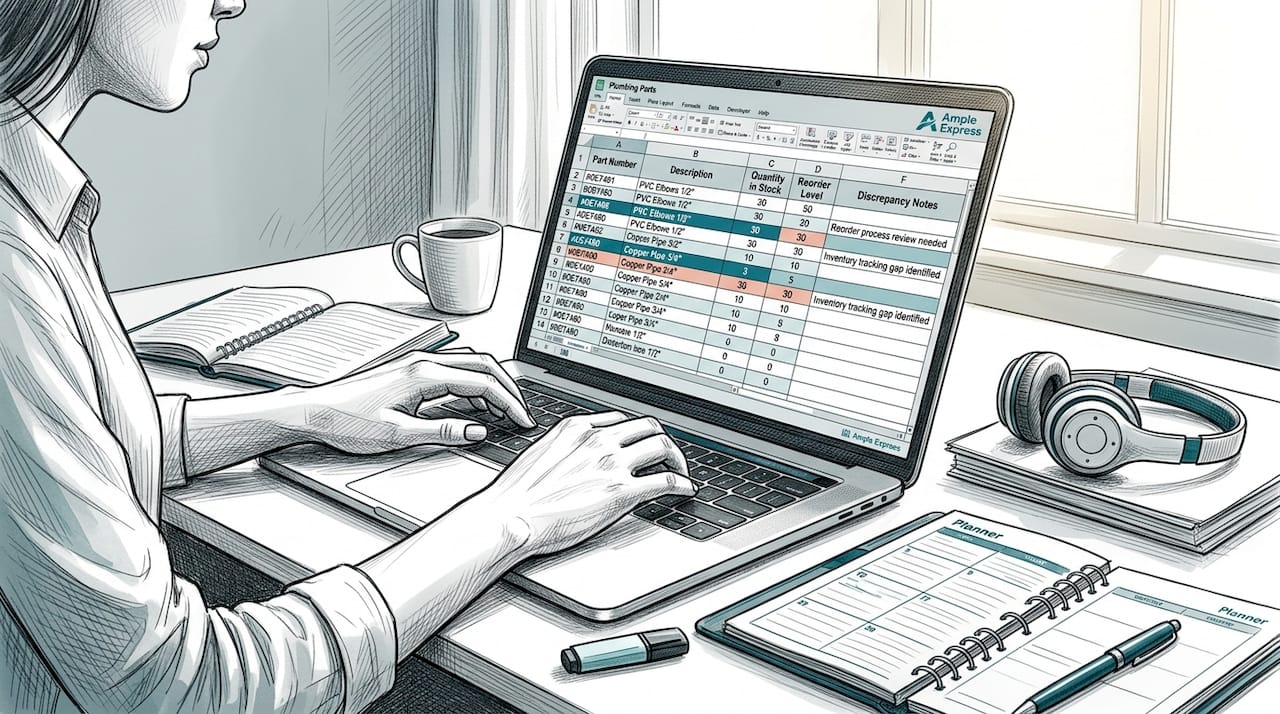
Spreadsheets are the most common free alternative plumbing owners default to, and they create a specific failure mode. Spreadsheets cannot maintain real-time inventory accuracy across truck and office simultaneously, which causes data splits. A technician marks a part as used on-site while the office spreadsheet still shows it in stock. The result is a duplicate order, a missed job, or an emergency purchase at retail price.
Pro Tip: Before committing to any software, test mobile sync by having a field tech update a job record while the office monitors the dashboard in real time. If the update takes more than 30 seconds or requires a manual refresh, the tool is not field-ready.
Data lock-in is another underappreciated downside of free software in plumbing. Several free tools offer no export function, meaning your job history, customer contacts, and invoice records are trapped if you decide to switch platforms. Reviewing plumbing software hidden fees before signing up helps you spot these traps before they cost you.
What is the super user risk in plumbing software management?
The "super user" problem is one of the most overlooked free software concerns for plumbers. A super user is the one employee who knows how the software is configured, where the data lives, and how to run reports. When that person is on vacation, sick, or leaves the company, your workflows stop.
Most contractors use only about 30% of the software features they have access to. That underutilization is worse with free tools because there is no vendor success team pushing adoption or training your crew. The knowledge gap concentrates in one person by default.
The operational risks this creates include:
- Broken reporting. If the super user built custom reports, no one else can interpret or rebuild them.
- Undocumented workflows. Dispatch sequences, invoice templates, and job status rules exist only in one person's memory.
- No escalation path. Free software has no support line to call when the super user is unavailable and something breaks.
- Training gaps. New hires receive no structured onboarding, so errors compound over time.
Lack of shared knowledge and vendor support increases operational fragility directly. The fix is straightforward: document every workflow, distribute software training across at least two team members, and treat software governance as a recurring management task rather than a one-time setup. Reviewing pitfalls of unmanaged tech deployments gives you a structured framework for distributing that knowledge before a crisis forces the issue.
What does free plumbing software actually cost over time?
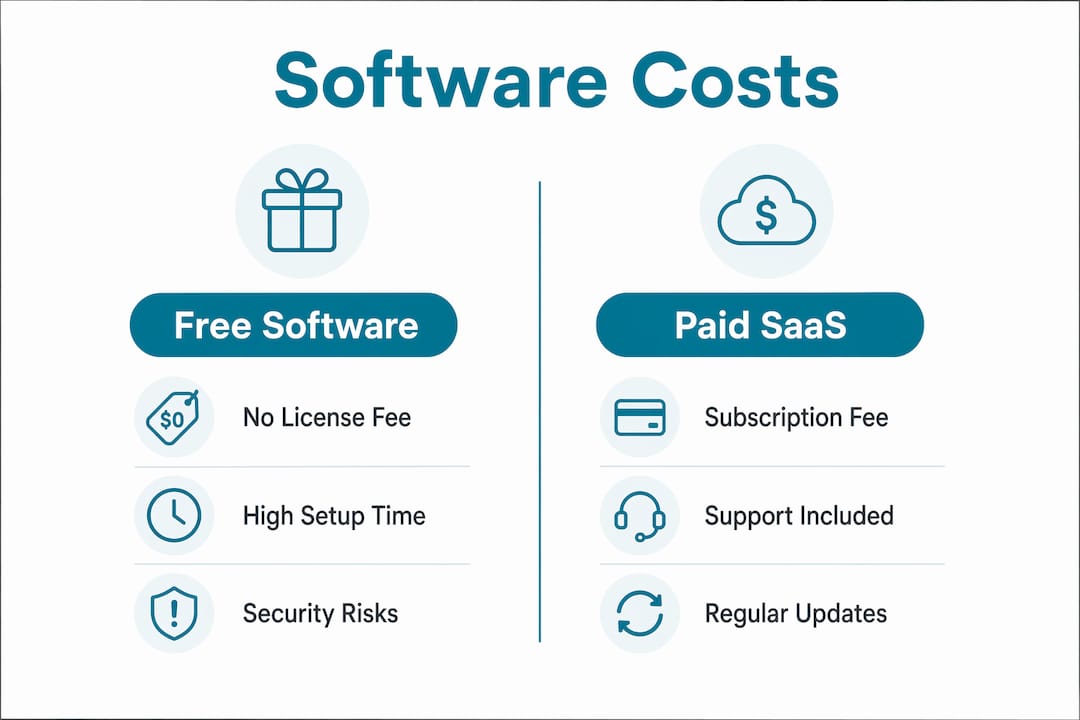
The total cost of ownership is where the impact of free software on plumbers becomes undeniable. Open-source CRM platforms, for instance, appear free at the point of download. The reality is that CRM development and customization costs typically run between $157,500 and $262,500, before factoring in hosting, maintenance, and staff training. That figure represents the cost of building a usable system, not just installing one.
Even lighter free tools carry ongoing expenses that most plumbing owners do not budget for:
| Cost category | Free software | Paid SaaS |
|---|---|---|
| Initial setup | $0 license, developer time | Subscription fee, guided onboarding |
| Security patching | Manual, owner-managed | Vendor-managed, automatic |
| Downtime risk | High, no SLA | Low, contractual uptime guarantee |
| Training costs | Self-directed, inconsistent | Structured, vendor-provided |
| Data recovery | Out-of-pocket | Included in plan |
Security vulnerabilities in open-source software rose 29.9% from 2023 to 2024 globally. That growth rate means the maintenance burden on free tools increases every year, not stays flat. A plumbing business owner who adopted a free open-source dispatch tool in 2023 faces a meaningfully more dangerous security environment today without a vendor managing patches.
Pro Tip: Build a simple annual cost model before choosing any software. Add up estimated hours spent on setup, training, troubleshooting, and security management, then multiply by your hourly labor cost. Compare that total against a paid SaaS subscription. The math usually favors paid options within the first year.
Good inventory software for plumbing typically costs $50 to $150 per month. That range buys real-time sync, mobile access, and vendor support. Measured against the cost of one emergency parts order or one missed service call, the subscription pays for itself quickly.
How can plumbing owners safely evaluate software before committing?
Choosing the right software is a process, not a single decision. Follow these steps to assess any tool, free or paid, before it touches your operations:
- Run a security check first. Verify the software publisher's identity, confirm the installer is digitally signed, and check whether the vendor publishes a security disclosure policy.
- Request a demo or free trial. Any reputable paid platform offers a structured demo. Use the contractor software selection checklist to guide your evaluation questions.
- Test mobile sync in the field. Have a technician update a job record from a truck while the office monitors the dashboard. Confirm the sync is real-time, not batch-updated.
- Verify data export options. Before signing up, confirm you can export your full job history, customer list, and invoice records in a standard format like CSV or PDF.
- Distribute training from day one. Assign at least two team members to learn the software fully. Document every workflow in writing before going live.
- Compare feature caps against your volume. If you run more than 20 jobs per month, any free tier with that cap is already disqualified.
- Budget for technology as a managed asset. Set an annual software budget that includes subscription fees, training time, and a contingency for migration if a tool underperforms.
Is free software safe for plumbing operations? Only if you treat it with the same governance discipline as paid software, which eliminates most of the cost advantage. For critical workflows like dispatch, invoicing, and payment processing, a vendor-supported SaaS platform is the lower-risk choice.
Key takeaways
Free plumbing software carries cybersecurity, operational, and financial risks that consistently exceed its zero-dollar price tag, making paid SaaS platforms the lower-risk choice for active plumbing businesses.
| Point | Details |
|---|---|
| Cybersecurity exposure | BEC and ransomware attacks target plumbing workflows; free tools lack patch management and breach accountability. |
| Functional caps | Free tiers like Workiz Lite cap at 20 jobs per month, making them unworkable for active crews. |
| Super user dependency | One employee controlling all software knowledge creates a single point of failure with no vendor support to fill the gap. |
| Hidden ownership costs | Open-source CRM customization can exceed $157,500; security vulnerabilities in open-source tools rose 29.9% in one year. |
| Safer evaluation steps | Verify publisher identity, test mobile sync, confirm data export, and distribute training before committing to any platform. |
Why I stopped recommending free software to plumbing clients
I have reviewed software decisions for field service contractors for years, and the pattern is consistent. A plumbing owner adopts a free tool to save $100 per month. Twelve months later, they are paying a consultant $3,000 to migrate data that was never properly exported, or they are dealing with a ransomware incident that shut down dispatch for three days. The math never works out in favor of free.
The deeper issue is that free software creates a false sense of control. You own the tool, but you do not own the security updates, the support line, or the roadmap. When something breaks at 7 a.m. on a Monday with six jobs on the board, there is no one to call. That is not a hypothetical. It is the most common story I hear from plumbing owners who come to Ample Express after a software failure.
My advice is direct: treat software as a managed business asset with a real budget line. The plumbing businesses I see scaling past five trucks are not running on free tools. They are running on platforms with uptime guarantees, mobile sync, and a support team that picks up the phone. The $100 per month you save on software is not worth the $10,000 recovery cost when it fails. Prioritize operational continuity from the start, and choose platforms you can grow into rather than ones you will outgrow in 90 days.
— Blake
Find the right plumbing software without the guesswork
Ample Express evaluates over 30 field service software platforms ranked by crew size, pricing path, and rollout risk, so you are not making this decision blind.
If you are ready to move beyond free tools and find a platform built for active plumbing operations, the 2026 plumbing software comparison on Ample Express gives you a ranked shortlist with pricing benchmarks and fit recommendations specific to your crew size. You can also explore field service software by trade if you manage multiple service lines. Every recommendation includes a free trial or demo path so you can verify fit before you commit.
FAQ
What makes free plumbing software a security risk?
Free plumbing software typically lacks regular security patching and vendor breach accountability, making it vulnerable to ransomware and BEC attacks that target dispatch and payment workflows.
Can spreadsheets replace plumbing inventory software?
Spreadsheets cannot maintain real-time sync between truck and office, which causes inventory mismatches, duplicate orders, and missed jobs. Dedicated inventory software typically costs $50 to $150 per month and eliminates these errors.
What is the super user risk in plumbing software?
A super user is the single employee who controls all software knowledge. Most contractors use only about 30% of their software features, and when that person is unavailable, reporting and workflows break with no vendor support to recover them.
Is open-source plumbing software actually free to operate?
Open-source software requires ongoing hosting, security patching, and customization. Development costs alone can reach $157,500 to $262,500, and security vulnerabilities in open-source tools rose 29.9% from 2023 to 2024.
How do I evaluate whether a plumbing software tool is safe to use?
Verify the publisher's identity, confirm a valid digital signature on the installer, test real-time mobile sync in the field, and confirm full data export options before committing to any platform.
Recommended
- Plumbing Software Hidden Fees: How to Avoid Them | Ample Express
- austin Plumbing software guide | Ample Express
- chicago Plumbing software guide | Ample Express
- Best Plumbing Field Service Software (2026) - Compare Top Tools