
What Is Per-User Software Pricing? A 2026 Guide
Discover what is per-user software pricing and how it affects your budget. Get insights on optimizing costs in our 2026 guide.
July 13, 2026
Article

Per-user software pricing is a subscription model where companies pay a fixed, recurring fee for each individual assigned access to the software, regardless of how often they log in. Also called seat-based pricing, this model is the standard for horizontal software suites including CRM, project management, and field service platforms. For service-based businesses evaluating software, understanding what is per-user software pricing determines whether your budget stays predictable or spirals with your headcount. This guide covers the mechanics, trade-offs, and optimization tactics you need before signing any contract.
What is per-user software pricing and how does it work?
Per-user pricing charges a fixed, recurring fee per assigned user, billed monthly or annually, regardless of active session counts or feature use. The industry term is seat-based pricing. Each "seat" represents one named user with login credentials. The fee applies whether that person logs in daily or once a quarter.
The definition of a "seat" varies by vendor and directly affects your total bill. Some platforms count only full-time employees. Others include contractors, guest accounts, or read-only viewers. Changing the seat definition to include contractors or guest users can increase billed seats by 20–40% even if the per-seat price stays flat. That is a significant budget impact from a single contract clause.
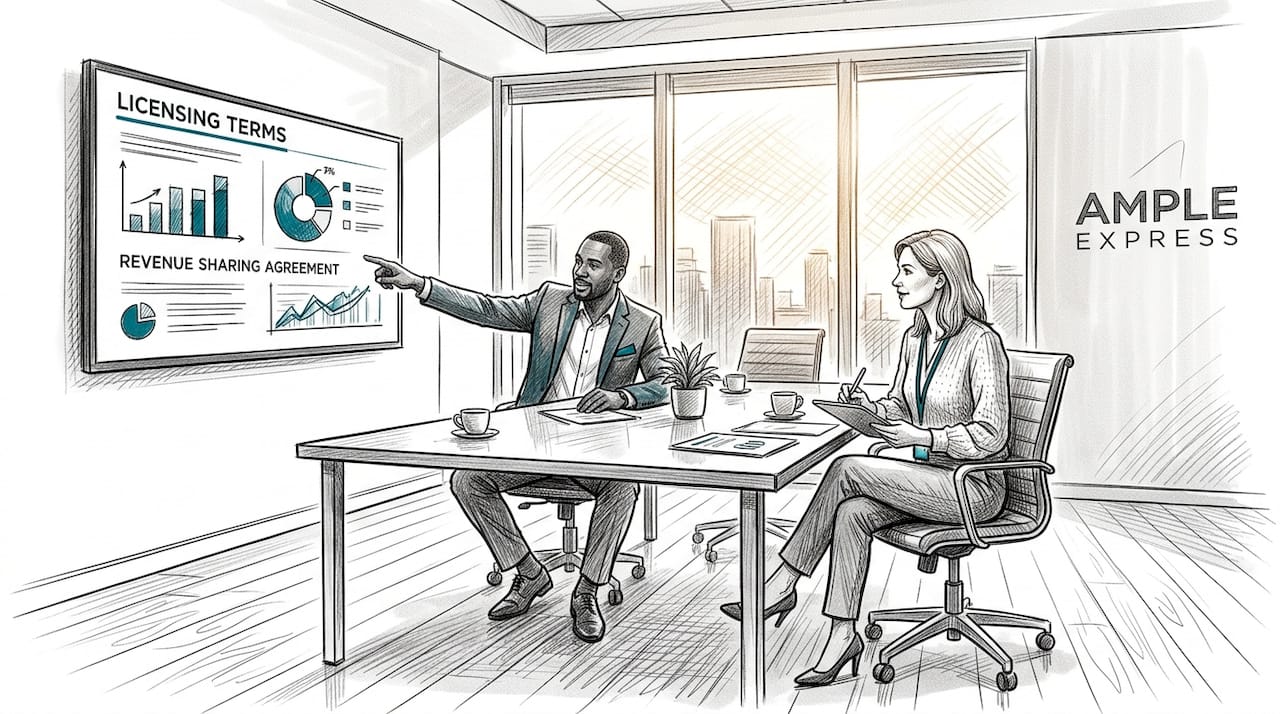
Most vendors structure per-user pricing in tiers. A common pattern looks like this:
| Tier | Seats | Monthly Price per Seat | Annual Discount |
|---|---|---|---|
| Starter | 1–10 | $25–$45 | 10–15% |
| Growth | 11–50 | $18–$35 | 15–20% |
| Mid-Market | 51–200 | $12–$25 | 20–30% |
| Enterprise | 200+ | Negotiated | Up to 55% |
Billing cycles matter too. Annual contracts typically carry a 15–20% discount over monthly billing. Vendors lock in revenue; you lock in a lower rate. The trade-off is reduced flexibility if your team size changes.
Pro Tip: Before signing, ask the vendor for a written definition of what counts as a billable seat. Clarify whether contractors, seasonal workers, and integration accounts each consume a seat.
What are the advantages and disadvantages of per-user pricing?
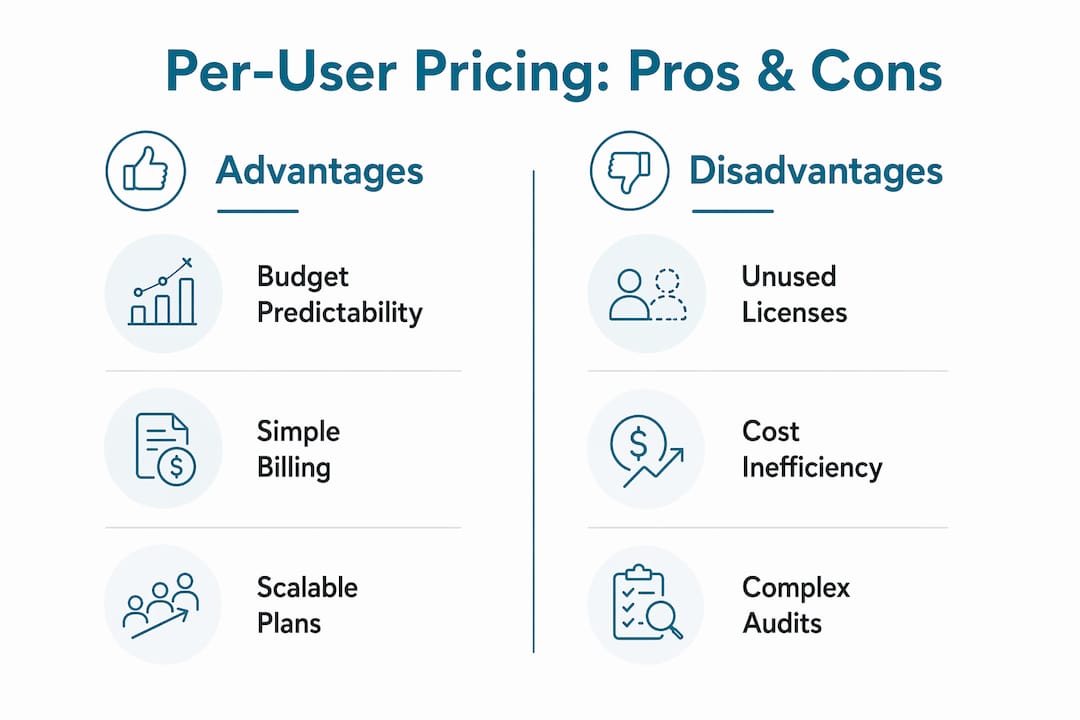
Budget predictability is the primary benefit of per-user pricing for buyers. Your monthly software cost ties directly to headcount, making it easy to forecast and approve in annual budgets. Vendors benefit from guaranteed recurring revenue regardless of how actively users engage with the platform.
Advantages of per-user pricing:
- Predictable costs. Monthly spend is fixed and easy to reconcile against payroll.
- Scales with team growth. Adding a technician means adding one seat at a known rate.
- Encourages adoption. Every team member gets full access, which supports consistent workflows across dispatch, job history, and scheduling.
- Simplifies vendor negotiations. Volume discounts are tied to seat counts, giving you a clear lever to pull.
- Fits collaboration tools well. Per-user models best fit collaboration, sales, and HR platforms where value scales with user count.
Disadvantages of per-user pricing:
- Shelfware risk. Paying for seats assigned to inactive users is common. Teams often fail to de-provision accounts when staff leave or shift roles.
- Poor fit for power-user workflows. If two technicians generate 80% of your revenue, a per-seat model charges you the same as a 20-person team.
- Seat definition disputes. Ambiguous contract language around contractors or guest accounts can inflate costs unexpectedly.
- Limited cost-to-value alignment. You pay the same whether a user runs 50 jobs a month or zero.
Implementing quarterly seat audits reduces paying for unused licenses and shelfware, improving operational efficiency. This single practice often recovers 10–15% of annual software spend without renegotiating a single contract.
How are SaaS pricing trends reshaping per-user models in 2026?
The per-user model is not disappearing, but it is evolving. Hybrid pricing models combining per-user fees with usage-based costs like API calls or AI processing see a median revenue growth rate of 21%. That growth rate signals where the market is heading.
Vendors are adding consumption layers on top of seat fees. You might pay $20 per seat per month plus a variable charge for AI-generated estimates, automated dispatch events, or SMS notifications. This structure better matches cost to actual value delivered. It also makes budgeting more complex.
Here is what this shift means for service-based buyers in practice:
- Audit your usage data before renewal. Know which features your team actually uses. Hybrid contracts charge for consumption, so unused features cost nothing but underused AI tools still appear in your bill.
- Separate pricing from packaging. Pricing sets the unit and fee; packaging arranges features into tiers. A vendor can change your package without changing your per-seat rate, and vice versa. Understand both before signing.
- Request usage reports quarterly. Most enterprise-tier platforms provide consumption dashboards. Use them to identify which seats and features drive real operational value.
- Model hybrid costs at scale. A $15 per-seat fee looks affordable for 30 users. Add $0.10 per AI dispatch event across 500 monthly jobs and your effective cost per seat rises materially.
- Negotiate caps on variable charges. Many vendors will agree to a monthly ceiling on usage-based fees. This protects your budget during high-volume periods.
The fastest SaaS revenue growth comes from hybrid pricing that blends seat fees with value-based usage charges. Buyers who understand this shift negotiate better contracts and avoid bill shock at renewal.
For a current view of how these trends affect field service software specifically, the 2026 field service pricing guide from Ampleexpress breaks down which models are gaining traction by trade and crew size.
How to evaluate and optimize per-user software costs
The first step is defining your actual seat count before talking to any vendor. Count active employees, contractors who need system access, and any integration or admin accounts. Then apply the 20–40% seat inflation risk to stress-test your budget assumptions.
Evaluation checklist for per-user pricing:
- Confirm the vendor's written definition of a billable seat.
- Identify which roles need full access versus read-only or limited access.
- Request a volume discount schedule for your expected seat range.
- Ask whether annual prepayment unlocks a lower per-seat rate.
- Clarify the process for adding or removing seats mid-contract.
- Verify whether unused seats carry over or expire at period end.
Mid-market buyers typically negotiate 15–30% discounts on 200–1,000 seats. Enterprise buyers reach up to 55% on very large deals. If you are buying 50–200 seats, you have real leverage. Use it.
The 10x value rule advises that software's delivered value should be at least 10 times the per-seat cost. If a $30 per-seat tool saves each technician one hour of admin work per week at a $60 hourly rate, the math works. If the savings are harder to quantify, that is a signal to reconsider the investment.
Pro Tip: When negotiating, ask for a free 30-day seat expansion window at contract start. This gives your team time to finalize headcount without paying for seats you have not yet filled.
Use the software cost calculator from Ampleexpress to model your per-user costs across different seat counts and billing cycles before entering any vendor negotiation.
For additional context on software pricing benchmarks specific to service businesses, Ampleexpress publishes regional data that shows what comparable crews are actually paying per seat in 2026.
Key Takeaways
Per-user software pricing delivers budget predictability tied to headcount, but buyers who skip seat audits and ignore hybrid pricing trends consistently overpay.
| Point | Details |
|---|---|
| Seat definition drives cost | Clarify contractor and guest account rules before signing; seat inflation can reach 20–40%. |
| Volume discounts are negotiable | Mid-market buyers can secure 15–30% off; enterprise deals can reach 55% with the right approach. |
| Quarterly audits cut waste | De-provisioning inactive seats is the fastest way to recover software budget without renegotiating. |
| Hybrid models are growing | Combining per-seat fees with usage charges delivers 21% median revenue growth for vendors. |
| Apply the 10x value rule | Software should deliver at least 10 times its per-seat cost in measurable operational savings. |
What I've learned about per-user pricing after years of watching service businesses overpay
The most common mistake I see is buyers treating the per-seat rate as the only number that matters. They negotiate the headline price down by $3 per seat, then sign a contract with a seat definition that includes every contractor and integration account they have. Six months later, their bill is 35% higher than projected and they cannot figure out why.
The second mistake is skipping the seat audit entirely. Turnover in field service is real. Technicians leave, roles change, and seasonal workers come and go. Every one of those former employees is still consuming a seat unless someone actively removes them. I have seen 20-person crews paying for 28 seats because nobody ran a quarterly review.
My honest view on hybrid pricing: it is better for buyers than pure per-seat models, but only if you go in with usage data. Vendors design hybrid contracts to capture more revenue from high-volume users. If you know your dispatch volume, your AI usage, and your API call patterns before the negotiation, you can set caps and protect your budget. If you walk in blind, the variable charges will surprise you at renewal.
The negotiation guide for field service software from Ampleexpress covers the specific levers that work in 2026 contracts. Read it before your next renewal conversation.
Decision-makers who align pricing units with actual user value and adoption patterns before negotiating packaging and features consistently get better outcomes. That sequence matters. Pricing first, features second.
— Blake
How Ampleexpress helps you find the right pricing fit
Choosing a software pricing model is easier when you have real benchmarks and a ranked shortlist built for your crew size and trade.
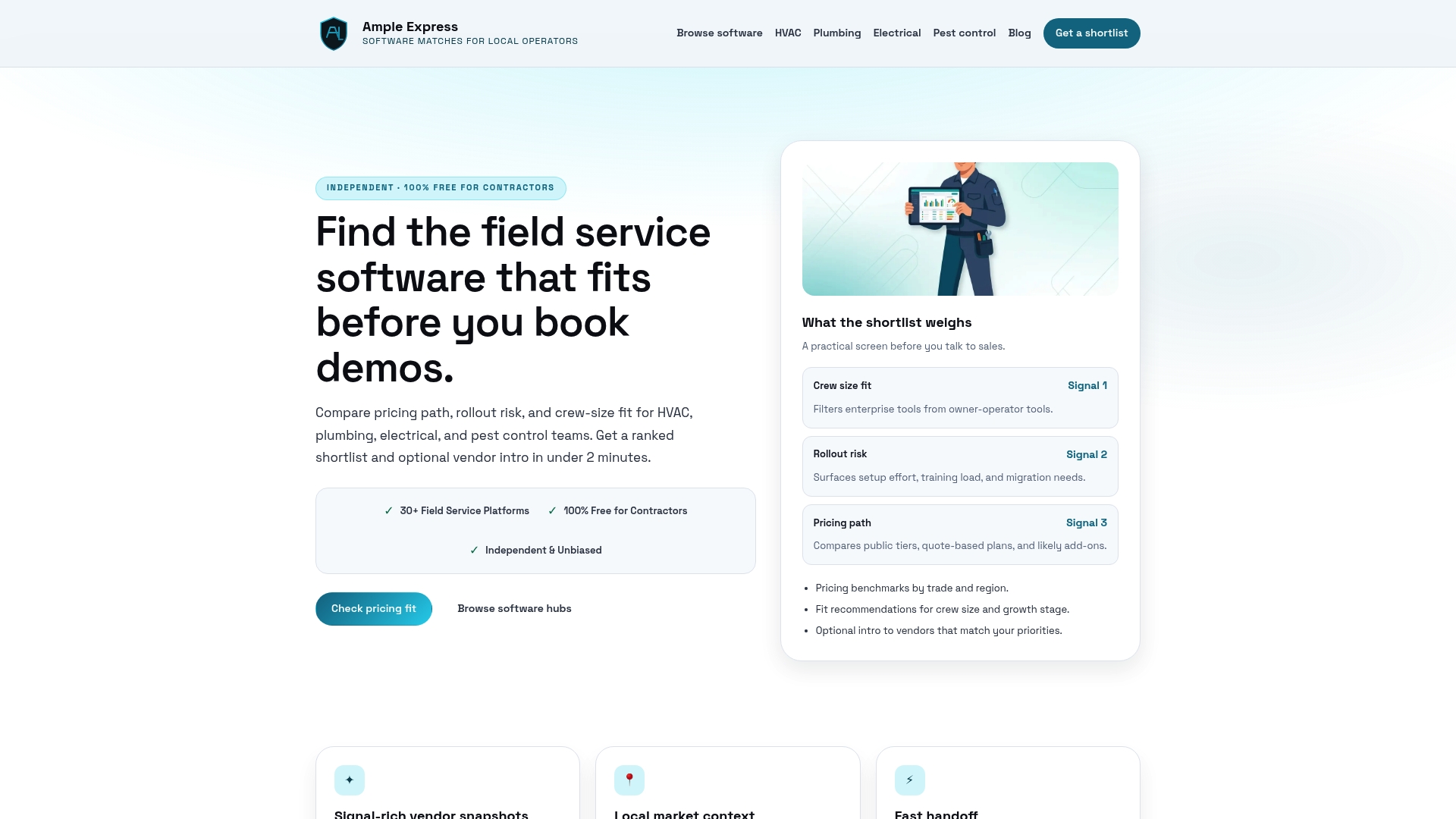
Ampleexpress evaluates over 30 field service software options across HVAC, plumbing, electrical, and pest control, with pricing paths, rollout risk ratings, and fit recommendations for each. The platform highlights which tools use per-user pricing, which use hybrid models, and what comparable crews in your region are actually paying. You get a shortlist built around your headcount and operational needs, not a generic vendor directory. Visit the field service software guide to see ranked options with pricing model details for your trade and crew size.
FAQ
What is the difference between per-user and per-seat pricing?
Per-user pricing and per-seat pricing are the same model. Both charge a fixed recurring fee for each named individual assigned access to the software, regardless of usage frequency.
How do I calculate per-user software costs for my team?
Multiply your total billable seat count by the per-seat monthly rate, then factor in any annual discount. Include contractors and admin accounts in your seat count to avoid underestimating costs.
When does per-user pricing become too expensive?
Per-user pricing loses efficiency when a small group of power users generates most of your output. In those cases, usage-based or hybrid pricing models typically deliver better cost-to-value alignment.
What is a seat audit and why does it matter?
A seat audit is a quarterly review to identify and remove inactive user accounts. Quarterly seat audits directly reduce shelfware costs and prevent paying for licenses assigned to former employees or inactive roles.
Can I negotiate per-user software pricing?
Yes. Mid-market buyers typically secure 15–30% discounts on deals covering 200–1,000 seats, and enterprise buyers can reach up to 55% off on large contracts. Volume, contract length, and annual prepayment are the primary negotiation levers.